
 3
3
 0
0
One of the most special aspects of the University of Queensland campus are how they immerse you within a realm of greenery and nature. UQ hosts a large variety of wildlife, including over 17,400 trees and over 64 species of animals such as birds, possums, lizards, etc. To make those walks to class more interesting, it is well worth keeping an eye out and actively trying to notice and appreciate the impressive animals that surround you. Facebook groups like UQ DuckSpace and spaces such as the UQ Sustainability Office provide information about wildlife and sustainability throughout the University of Queensland, and are worth following if you have a passion or interest in UQ and its environments.
Some Types of Wildlife at UQ:
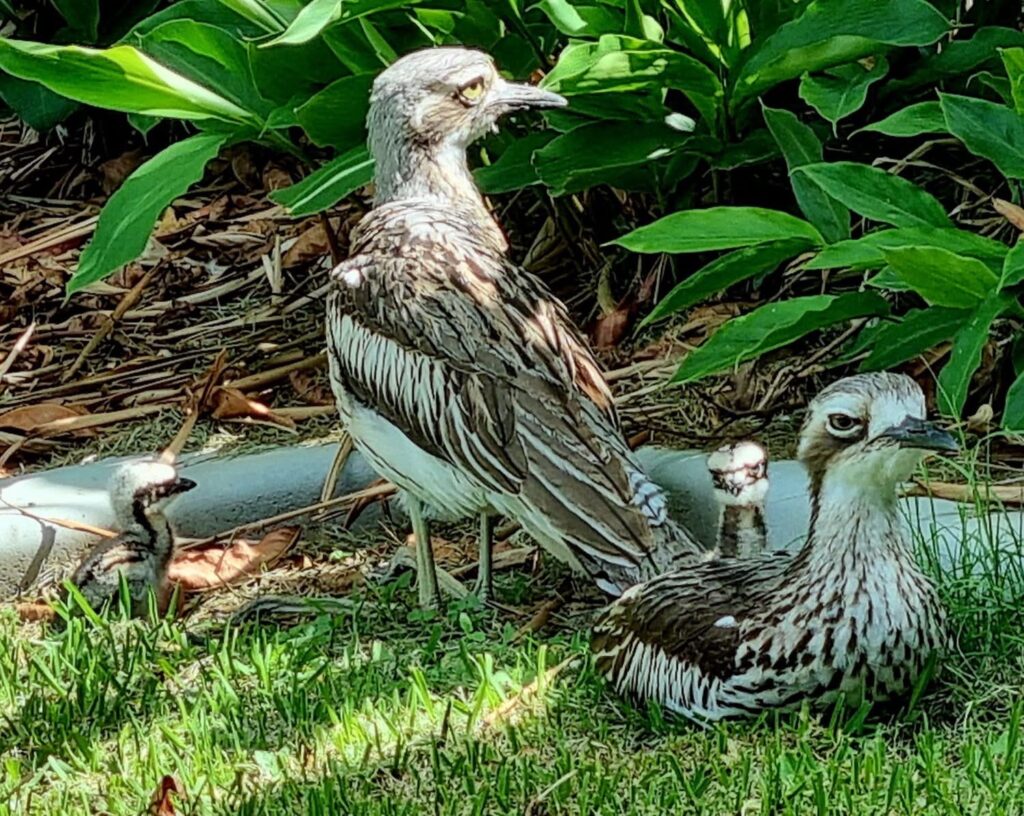
Bush Stone-curlew (Burhinus grallarius)
Bush stone-curlews are large, ground-dwelling nocturnal birds with very unique calls. These haunting screeches have even earned them the nickname ‘murderbirds’. These intensely yellow-eyed birds are impressive at camouflage and freeze motionless when disturbed. Whilst commonly spotted at and around UQ Lakes, curlews can often be seen around gravelly locations such as carparks and pavements. As they are largely nocturnal, curlews forage at night and roost in various habitats throughout the day.
Image credit: Carolyn Spiertz
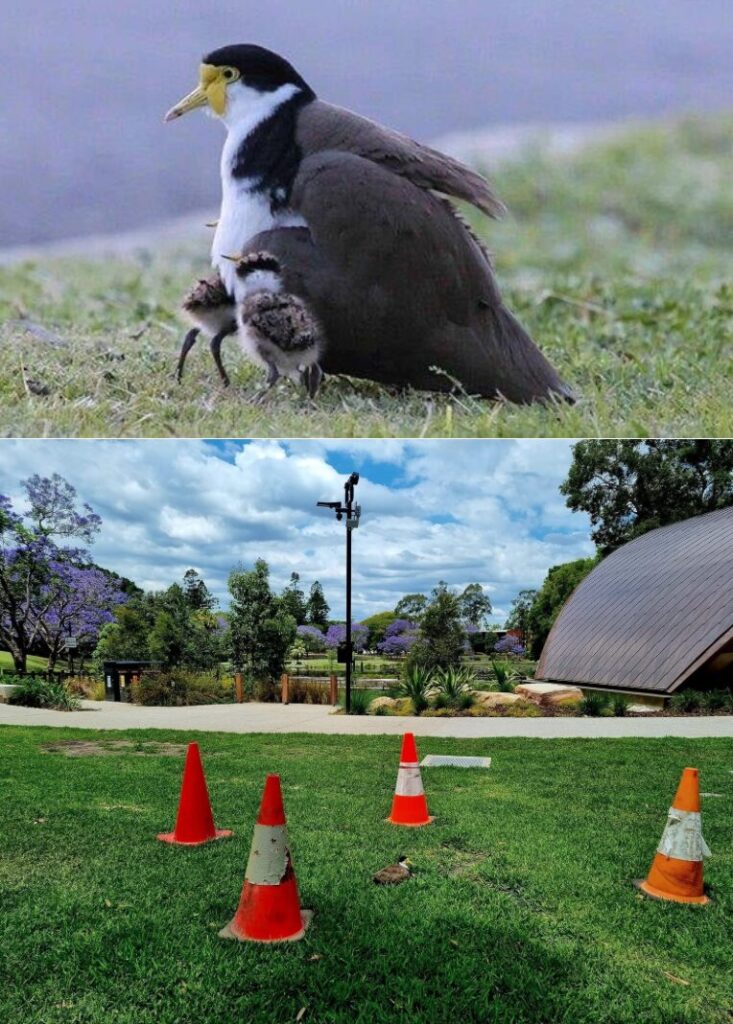
Masked Lapwing, known as a plover (Vanellus miles)
You’ll most likely recognise UQ’s masked lapwings under their colloquial term as plovers, as these birds belong to the same family as true plovers. You can often find these birds near UQ Lakes. Recognisable by their brown wings and the yellow wattles on their faces, they’ve garnered a reputation for diving at nearby people. Plovers are fiercely protective parents, and during breeding season when these birds have eggs in ground-dwelling nests and young chicks, they are prone to swoop people to defend their young. It is important to note that these swoops usually serve as a warning tactic, and actual attacks are incredibly rare. Whilst plover chicks are ridiculously adorable, be sure to not put the parents through undue stress and ensure you only observe from a distance.
Image credit (bottom): Carolyn Spiertz
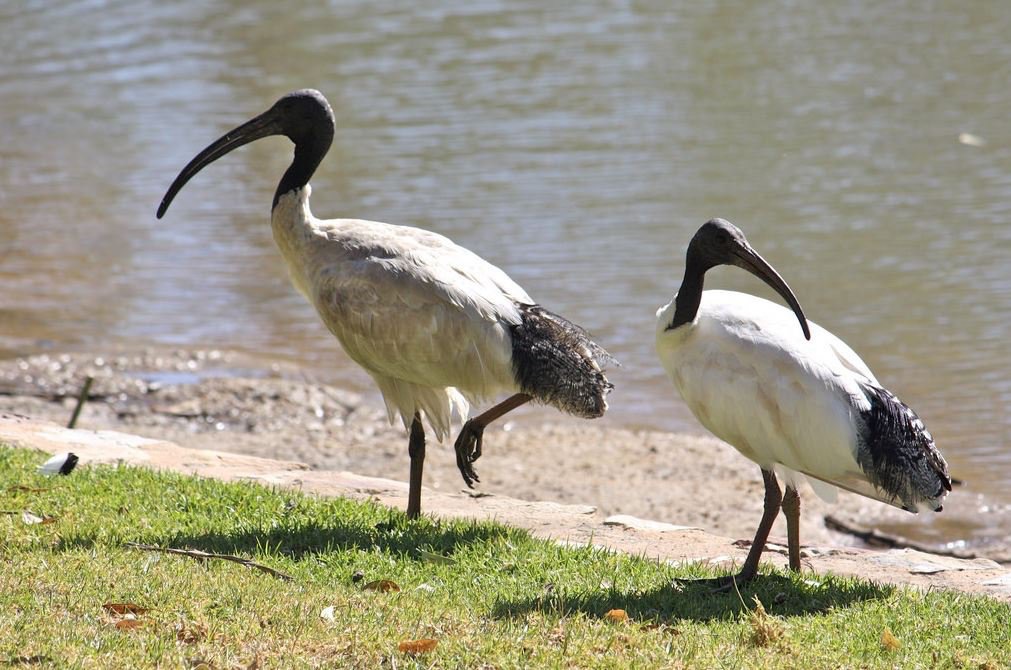
Australian White Ibis (Threskiornis Molucca)
The Australian White Ibis has garnered a reputation for being one of Australia’s most notorious birds as they often exist in highly urban environments where they feed on food waste, and can even harass people for food. However, ibises are in fact a protected species with a natural diet of insects and crustaceans, but have been forced to adapt to an increasingly urbanised world and have had their ability to forage for their natural diet hindered by humankind and their littering of food waste. These are actually highly intelligent birds, and were once revered as a symbol of drought resistance by some First Nations communities. Some types of ibis were even revered as sacred animals frequently found in Egyptian tomb paintings and hieroglyphics. The ibis is very prominent across UQ campus, and try to avoid feeding them or littering to ensure their protection and wellbeing.
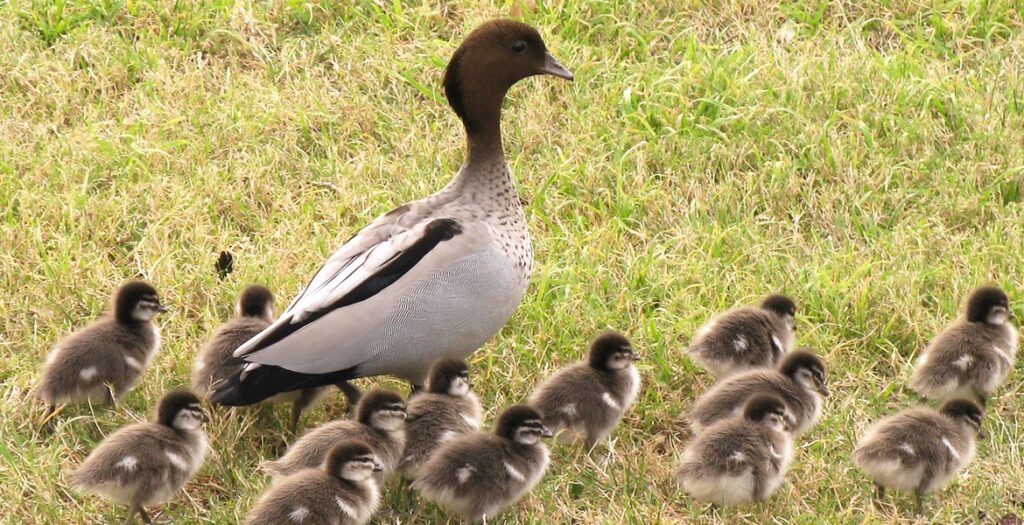
Australian Wood Duck (Chenonetta jubata)
The Australian wood ducks are much loved at UQ and even have their own dedicated mural on the Gordon Greenwood building. Ducklings are often spotted on the UQ campus at spaces like UQ Lakes, the Art Museum, and other lakeside areas. These ducks often graze on grass and are often seen crossing roads, so be especially careful when driving around the university as they are often easy to miss!
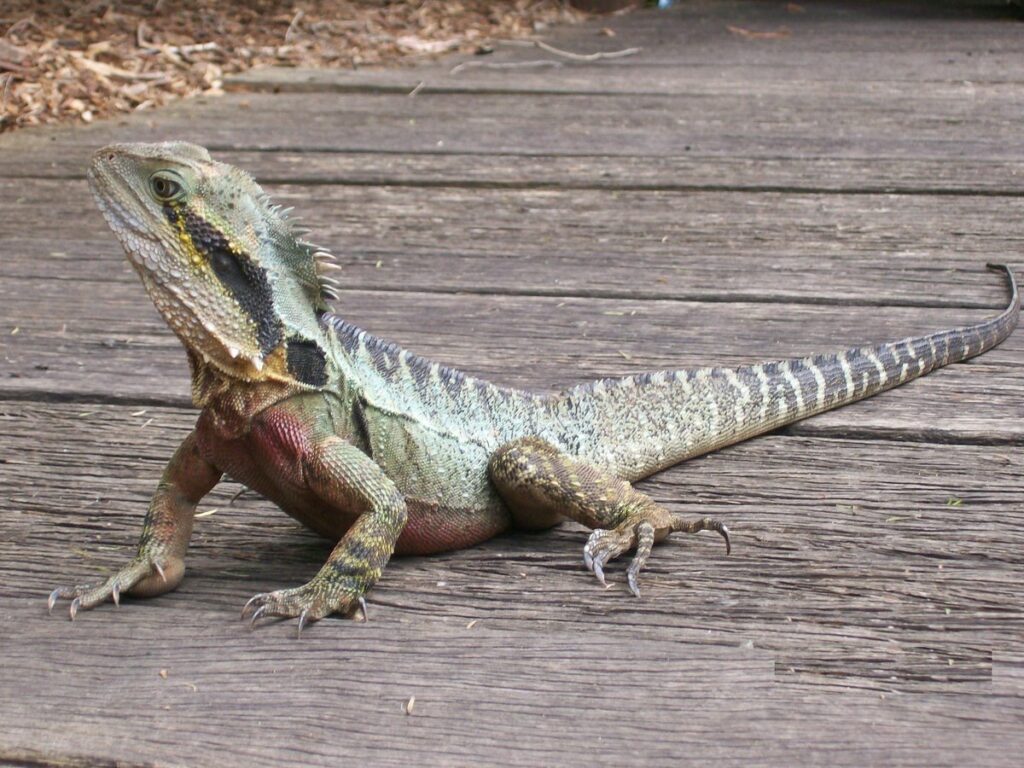
Eastern Water Dragon (Intellagama Iesueurii)
Found especially at the St Lucia campus around rivers and lakes, the Eastern Water Dragon is the largest water dragon in Australia. These semi-aquatic lizards can often be found in urban areas provided they are surrounded by water and trees, and it is for these reasons they can often be spotted at UQ Lakes, particularly along the pathways towards UQ Lakes station. These animals can often be found in large numbers, basking on rocks, swimming, and foraging on land. The lizards tend to be shy and wary of humans, but can deliver an impressive bite if threatened or handled. Observe them from a distance and don’t impede on their space, and they will almost definitely be harmless.
We all play an integral role in ensuring UQ’s wildlife is able to thrive.
How to help Injured Wildlife:
1. Take notice of your surroundings and be ready to assess whether an animal is in need of rescuing
2. Do not offer wildlife food or water
3. Do not handle injured animals
4. Respect the wildlife and maintain physical distance
5. Take care when driving
Reporting Injured Wildlife at UQ:
If you find an animal that has been injured it is incredibly important to report it so that the animal can receive the care it needs. You can report injured wildlife via these numbers:
· St Lucia – call PF Assist on (07) 3365 2222 from 8:30am to 4:30pm.
· Gatton – call the UQ VETS Small Animal Hospital on (07) 5460 1788
For reporting injured wildlife outside business hours you can contact wildlife carer organisations or the RSPCA. Some wildlife hospitals and carers include:
· RSPCA (Royal Society for the Prevention of Cruelty to Animals)
· Bat Conservation and Rescue Queensland
· Brisbane Area Rescue Network (BARN)
· Reptile Rehabilitation Queensland Inc.
· Pelican and Seabird Rescue


Author

Views: 2010