
 3
3
 3
3
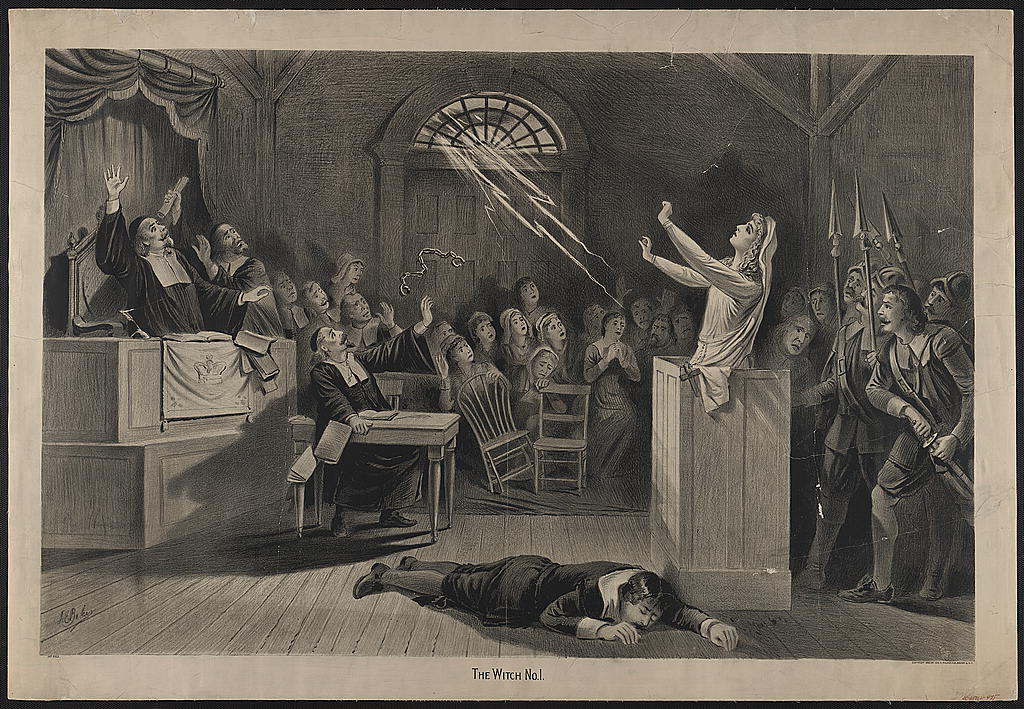
When economic conditions deteriorate, people find a scapegoat. This is a truism in all human history. In Renaissance Europe, bad farming harvests were a strong predictor of witchcraft trials. Crop failures, food shortages and economic distress were all blamed on supposed witches in control of the weather. Today we see a similar trend.
In the wake of post-covid inflationary shocks, a war in Ukraine, and the shortcomings of neo-liberal economics, the pitchforks have come out once again, but this time at migrants. The recent anti-immigration ‘Marches for Australia’ are indicative of this.
Protests occurred alongside a period of economic uncertainty, housing insecurities, and an increase in grocery prices, with the government supposedly enabling ‘mass immigration’ for electoral gain.
Right-wing, rage-baiting Instagram accounts pour petrol onto this anti-immigration fire. An example is “auspilled” (otherwise known as Hugo Lennon) who has gained considerable traction blaming immigrants for the problems facing modern Australia – simply swap the witch-accused villager with the Indian family.
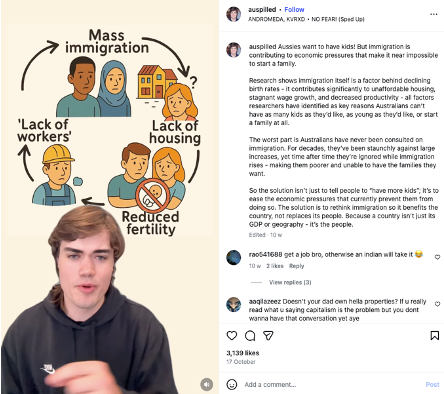
Here is a screenshot of an auspilled post.
Notice the dark-skinned man and lady with a hijab taking housing, jobs, and children away from the white people.
A simple graphic like this can have a profound impact on the attention economy online.
If only something as multifaceted and complex like the Australian economy was as simple as this poorly designed Chat-GPT graphic.
What auspilled is not telling you, is that he is actually the son of Anthony Lennon, a Non-Executive director at Peet, one of Australia’s biggest property developers. The company currently landbanks 30,000 properties – its business model reliant on Australia’s exorbitantly priced housing market.
Auspilled has never once mentioned that investors claimed $10.4 billion worth of negatively geared deductions between 2022-2023, or that a recent leaked government brief literally said: “low and middle-income earners are subsiding the retirement incomes of seniors with significant wealth in addition to their homes.” He has never brought up that Australia’s gas policy is a trainwreck – as we pay international market rates for our own energy.
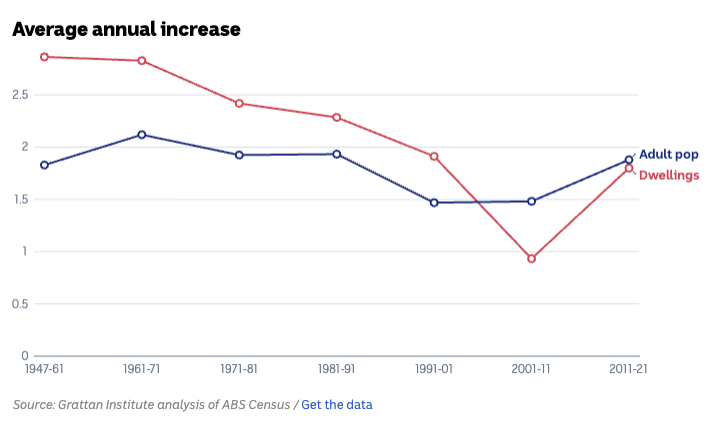
My point being – while it is easy to blame immigrants for the issues facing Australia, shifting our focus to the profound structural imbalances of our economy is a far more productive use of our time. Economic analysis shows that supply shortages are the primary cause of housing affordability – the rate in which Australia builds homes relative to population growth has flipped.
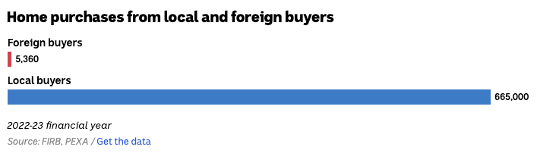
Furthermore, only 1% of homes purchased 2022-23 were from foreign buyers:
Evocative of what Senator David Pocock’s wrote in the Australian Financial Review, Australian’s are doing it tough, but blaming migrants isn’t going to fix the problem, and the government needs to play a more active leadership role in addressing the issue.
As he writes:
When governments fail to listen and plan, a vacuum opens up. This allows extremists – including white supremacists and neo-Nazis – to prey on people’s genuinely held concerns.
Currently, Australia has no net overseas migration target. We have an arbitrary forecast that Treasury puts out as part of the federal budget, and which is often completely wrong. Over the past few years, the Treasury forecast has been short by between 40,000 and 80,000 people.
These inaccurate figures and the lack of any cohesive plan for population, including migration, create a sense in the community of a total free-for-all, and feed a sense of anxiety and social division that is ripe for exploitation. As Aristotle said, nature abhors a vacuum.
It is easy to get emotional when we see Neo-Nazis pour onto our streets, and rightfully so. The romanticised ANZACs, so dear to the online manosphere realm, actually fought the Nazis, not marched alongside them. Migrants have and will continue to contribute to the foundations on which Australia is built, and there is no place for extremism in our society.
But the real grunt work is in policy. It is in being clear and upfront about the economic challenges of Australia’s future and how a sustainable migration policy contributes to that. Rather than villainise an Indian family online, let’s scrutinise how the government will build 1.2 million homes productively and sustainably.
The recent rise in One Nation’s national poll is concerning. But let’s unpack the Hanson argument – significantly reducing Australia’s migration will significantly impact GDP growth. Her former fish and chip shop for example, relies not only on migrant labour, but on migrant wallets purchasing her products. Her claim that immigration chloroforms essential services is misleading – removing migrant labour from industries like healthcare, construction, hospitality, and agriculture have the potential to push up costs, delay projects, and reduce overall output. Performative populism does not equate to productive economic policy.
Uncertainty fuels prejudice, conflict and hostility. As Australians, our responsibility lies in tackling the big economic challenges of the future through evidence-based decisions, clarity and respectful conversation – far more constructive than arguing in the comments of an online rage-baiter.


Author

Views: 2214