
 0
0
 0
0
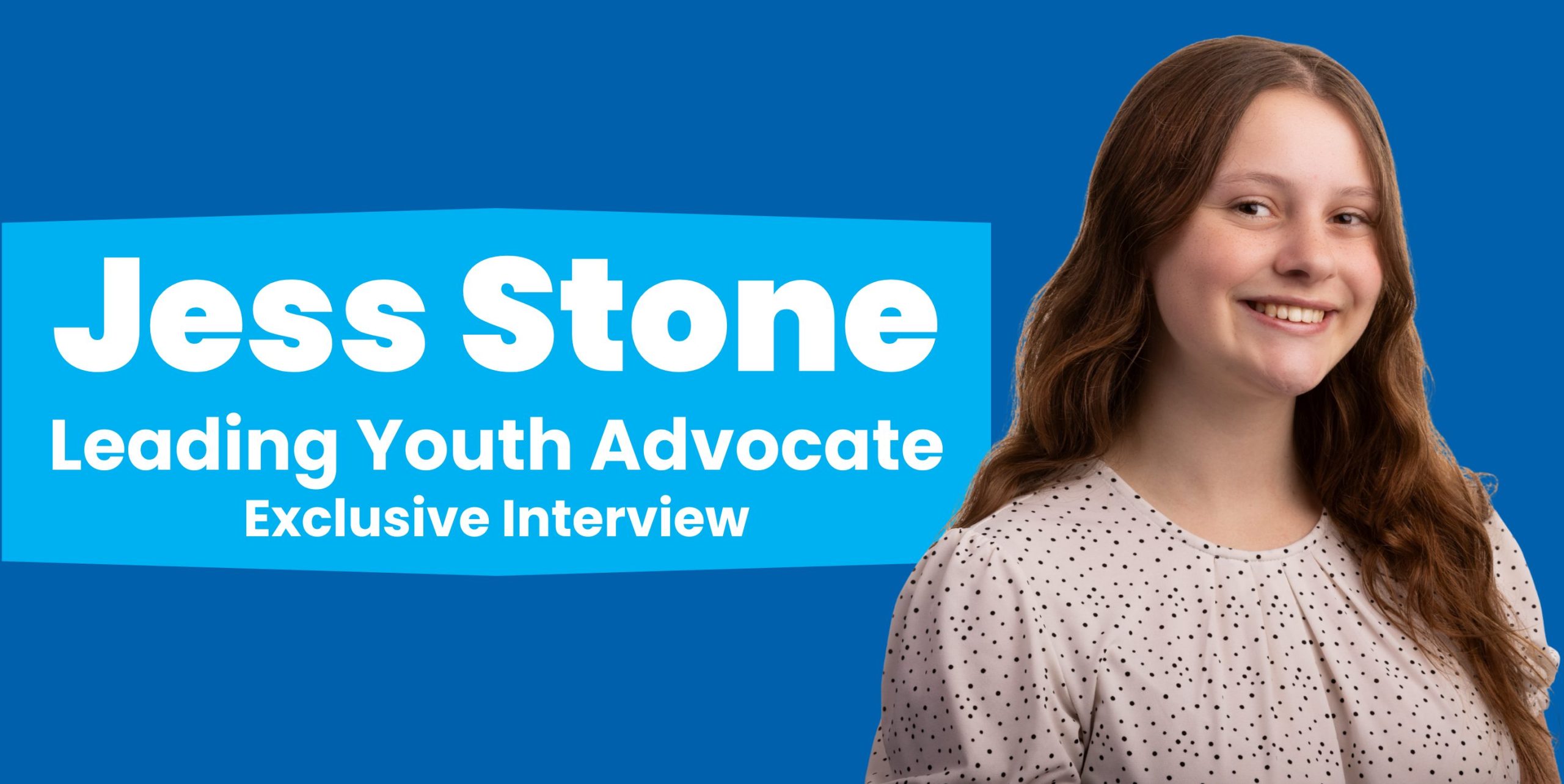
Rudolf interviewed Jess Stone for our February Issue to ask her about her experience as a youth advocate. You can keep up with her work on Instagram at @occa.youth.
RUDOLF – What do you do and what organisations are you a part of?
JESS – Well, I do quite a bit, so it’s always quite hard to describe what I do, but I guess I’ll just start off. I’m a youth policy consultant. I work with governments to improve their legislation by embedding the voices of young people in it. That takes multiple forms. The first kind of arm of my work is international youth policy. So the United Nations Sustainable Development Solutions Network, they have a youth initiative called SDSN Youth, and I run SDSN Youth’s Asia Pacific region, which means that I’m overseeing changemaker groups all across the Asia Pacific region from Kazakhstan to Korea, India to Indonesia. And I’m overseeing their projects and kind of being that connection between the young changemakers and the United Nations Sustainable Development Solutions Network.
And then I’m also the leader of the Brisbane Global Shapers Hub, which is an initiative of the World Economic Forum. So I lead Brisbane, and then I sit on the Australian board for the Global Shapers Community Australia charity entity. Those leadership roles effectively mean that I connect Brisbane to the broader World Economic Forum Global Shapers community. One of the projects that we’re running at the moment is the Oceania Caribbean Climate Alliance in collaboration with the Castries Hub of St Lucia in the Caribbean, and that’s effectively an inter-regional youth collaboration to advance and scale up climate initiatives.
I also advise the United States Embassy in Australia. Orygen is a youth translational mental health organization so I advise them too. And then the Daniel Morcombe Foundation and the National Association for the Prevention of Child Abuse and Neglect, those are two really prominent organisations in Australia that look at preventing abuse. So I advise them, and a lot of my work in the child abuse prevention space is as a survivor advocate, looking at Child Sexual Abuse Material (which is what child pornography is now referred to within the industry) and effectively looking at combining my international experience with my child protection experience to stop the cross-border dissemination of child sexual abuse material and the international sexual exploitation of children. So that kind of is what brings together my international youth policy side and my child protection side. I do work quite broadly across the youth policy sector. I don’t know if I’ve mentioned everything but those are some of the highlights.
RUDOLF – I feel like you could do more.
JESS – You want me to try and list everything?
RUDOLF – I think that would probably take us an hour alone. But an inevitable question that comes to mind when you list so many international, domestic, and great organizations. How did you get involved?
JESS – Yeah, so I think one of the first things I always recommend to young people who are wanting to get involved in the international youth policy consultancy space is to get on all of the mailing lists. And it’s ridiculous, but there’s so many different opportunity sharing websites, Opportunities for Youth, Opportunities Corner, Opportunities Radar. Google “youth opportunities,” and you find websites that are dedicated to specifically finding those opportunities for you. And you just spam link your mailing list email onto everything. You can have a separate email for this if you want as well, so it’s not overloading your primary, but I get dozens and dozens of emails a day from all these different websites that are effectively giving me the opportunities to my inbox without me having to look for them. So that’s the first thing I recommend, is let the opportunities come to you, sign up to all the mailing lists and then you find stuff that you didn’t even realize was out there.
Obviously I guess once you’ve kind of found those opportunities the next way to approach it is to first of all think about what you have capacity for, and also in particular how much pro bono capacity you have. In the youth sector we’re quite known for expecting young people to work for free, and I need everyone to know that you can very much get paid for this and you can get paid quite well. So take on some pro bono work, do some volunteering, but don’t undersell yourself. If there is an opportunity that is paid or that you can quote your rates for, make sure you do that. Particularly women, we’re socialised not to do that. I strongly recommend you do value your own insight, because a lot of governments do want to hear from you and a lot of organisations do want you to co-design with them. So that’s important. Don’t undervalue yourself.
And then even just on the minutiae level, like a good, strong, firm handshake and looking someone in the eye goes a long way. And I know that’s weird post-COVID, but it is definitely still important, even if it’s like an old fashioned piece of advice.
I guess, yeah, kind of the overarching thing that you can do to get involved in this sector is to get a combination of lower level positions within really big organisations and then high level positions within smaller organisations. Because then you’re kind of getting a combination of working in international organisations or United Nations agencies, while still then holding executive or board positions at smaller levels. Even university clubs are a good way to start. Make sure that you’re kind of getting your foot in the door. Don’t be afraid to say yes to an opportunity even if you don’t think you’re 100% qualified; they won’t offer you the job if they don’t think you’re qualified. Again, don’t undersell yourself. Make sure that you put yourself in those rooms, even if it’s uncomfortable.
RUDOLF – And leading from that, it’s one thing to know how to go and find opportunities to accept them, to make the most of them. But I think an important thing is understanding what you’re passionate about, what your values are, why you do it. And I would love to ask, what are you doing this for?
JESS – Yeah, so obviously I do kind of approach my particularly child abuse prevention work from a lived experience lens. And what powers me is wanting to make the generation that comes after us have a safer and healthier childhood than we did. And I think if every generation just works a little bit harder to protect kids, you know, we’re making the world a better place through that. I’ve worked through, you know, the Queensland Family and Child Commission. I’ve done a little bit of consulting with the Australian Human Rights Commission. But my big ones I do in the sector are Daniel Morcombe Foundation, you know, NAPCAN, and have done some work with Bravehearts, the National Office for Child Safety… kind of working across government and across charities to really just put young voices in those rooms where decisions are being made.
Because I have the fortunate ability, I can “speak government,” you know, I suppose I can understand the language of legislation, but then I can bring lived experience to that. And unfortunately, not enough young people are given that opportunity. So what drives me is trying to make sure that survivor voices are heard by government and by the people who make the decisions.
So it’s kind of like a translational role, taking community lived experience, my lived experience, and then transforming that into policy. And then yeah, that ripples out. That’s not just an Australian issue. As we know with Child Sexual Abuse Material in particular, it’s highly internationalized. Cross-border crime is huge in that sector. Peer-to-peer sharing is no longer just an in-person thing. Obviously with the digital world and globalization, you can send that material across the world.
And we also then require joint intelligence efforts to combat that. So Queensland’s victim identification team is one of the best in the world, but we can’t do it alone, right? So Child Sexual Abuse Material is a hugely international issue, and that’s where my international policy side comes in. I guess the thing that draws them together is I just want to protect kids. I want to make sure that fewer kids experience abuse and neglect every single year, because no kid should ever go through that.
RUDOLF – You’ve mentioned this before, especially when you were talking about pro bono work and it’s important that people our age are heard by government, but particularly that women often are expected to work more for free than men. I think going from what you’ve talked about now and before, what is it like working as someone, as a young woman who’s also on the spectrum in this space, in this whole area? What is it like? Are there any challenges? How do you overcome that?
JESS – Yeah, well, thank you for bringing up the fact that I’m on the spectrum. I think it’s really important to acknowledge that there are definitely intersectional challenges in the policy space. “Pub politics” is very much a thing. It’s the blokey kind of going to a pub, making decisions over a beer, and that can actually be quite confronting if you’re 20 years younger than everyone else in the room, and you’re the only woman. Even today that is oftentimes the case when I’m in those rooms. It’s a bunch of men and a bunch of alcohol and that’s still not only just in Australia but kind of internationally. You know, when I was at the World Economic Forum, incredible experience, but you look around and you still see all of those, I guess, pub politics things coming through.
It’s important to acknowledge that if you are a young woman in these spaces, the spaces weren’t designed for you. So sometimes you have to speak the language of men. You’ve got to almost, I guess, assert yourself with the type of male audacity that they just naturally have. That can come across strange on a woman only because we’re not used to seeing it. If a man had that level of confidence, that would be applauded. As women we’re socialized not to believe in ourselves and to kind of take that back seat, and I think that’s a bit ridiculous. So it feels weird at first, it’s kind of a muscle you’ve got to practice. Practice confidence, practice acting as if you are a mediocre 40 year old white man and channel that confidence and channel that audacity to get yourself in those rooms to make change for the better. Yeah, unfortunately that is still the system we live in, very male dominated in those spaces. But that’s changing slowly, very slowly, but it is changing.
RUDOLF – You say it’s changing now. And I will say this as someone who’s also in the politics sphere. Yeah, it is a lot of alcohol, it’s a lot of men, it’s not the safest environment, but you’re saying it’s getting safer or changing slowly, in what ways?
JESS – Well, I think the main thing is a lot of stuff is happening online now. So I guess there’s pros and cons to that. You miss out on some of that person-to-person connection. But I think it’s really incredible that I can be in my own space, dialing in and having a meeting with people in Nigeria or people in London or people in the Caribbean.
Most of my work, in fact I’d probably say about 90% of it, is fully remote. And I think that’s amazing because you can be in your own space while still contributing to those discussions. Meaning you don’t necessarily have to go down to a pub or enter those spaces if you’re not comfortable with them. Obviously if you are, that’s amazing, but if you’re not there are now a lot more remote opportunities, or at the very least hybrid opportunities.
When you’re looking for opportunities you can specifically filter for remote ones so that’s a really good way to kind of circumvent that, and that is becoming more and more normalized as well which is really cool.
RUDOLF – Right before you’re about to get onto a Zoom with someone from overseas, what kind of things do you like to do to relax, settle, and get yourself into this space?
JESS – Yeah, so the wellbeing question is always interesting because I do know that I’m a bit of a workaholic and I very much oppose hustle culture. I think it’s very damaging when people are taught that they have to be productive 24/7. So that’s something I’m working on 100%. I am trying to take that time for myself. I do recognize obviously when I’m working with international clients, a lot of those meetings are at really ridiculous hours.
And a lot of the time when you’re leading projects or you’re sitting on boards or an executive, you do kind of take on that extra workload. I think just kind of telling myself I don’t need to do everything, I don’t need to be everyone at the same time and I can delegate. That’s something I’m getting a lot better at nowadays is learning to delegate.
I mean, I have so many dozens of incredible young people who are working under me and they’re willing to take on those tasks. So yeah, that’s something that’s always a challenge is allowing myself to delegate and to take some of that load off myself. When I do have downtime, I love spending it with my partner and our cat and just kind of relaxing. I guess I’m not so much of a party person, but I do have a really great circle of friends, including this interviewer, actually. We’ve been friends for… very many, many years now. Yeah, I think people is what powers me, so kind of just keeping up those social connections, making sure that I’m letting other people help me when I need to be helped.
RUDOLF – So I just wanted to ask what was the timeline of when you first got involved in youth advocacy, both domestic and international, to where you’re at now?
JESS – I think it’s really important to acknowledge that, I mean, whilst I was starting out with like United Nations Youth Australia’s youth programs as a delegate when I was a kid, kind of doing that as almost an after school activity, I didn’t get involved in, I guess, proper international relations or the policy space until actually after I graduated high school. A lot of people think that you’ve got to do it as young as possible… I was not a very, I guess, I was not as healthy as I am now back when I was in high school and I didn’t have the capacity to do all this work. So yeah, I didn’t start any of this really until I graduated, and I took a working gap year. So while I was working full-time, I dedicated my afternoons and evenings to finding out what I was passionate about, trialing out all sorts of, you know, youth advisory councils and…
And that’s actually a really good way to get involved in the governance space is Google your state or your city, and then plus “Youth Advisory Council” or “Youth Advisory Committee,” “Youth Advisory Group.” Those are existing organisations or governments that want young people to work with them and give them consultation and advice.
So I did a count the other day and in the past, I think 3 years or so, I’ve been on like 12 youth advisory councils. If i remember my numbers correctly. Because there’s so many out there, right, and you find them for organizations that you’re super passionate about, and that’s kind of how I guess I entered the governance space, and then I almost serendipitously got shoulder-tapped for the World Economic Forum’s Global Shapers Hub in Brisbane. I joined not entirely sure what it was going to be, and I was only there for a couple of months before Nicholas Johnson, who I think he’s actually, he was a UQ lecturer recently. But yeah, he’s an economist and he, I guess, saw potential in me. And he asked if I would want to take over from him in leading the hub. And yeah, so I wouldn’t have put my hand up for that. But again, it’s people, I guess, surrounding yourself with people who see that potential in you. And yeah, he encouraged me to apply and then somehow I found myself, you know, representing Brisbane on the global stage from something that I was never expecting to have a leadership position in.
SDSN Youth, I found them again through one of those opportunity sharing websites I talked about, but they’re a really prominent youth organization across the world. And I put my hand up for something I thought I was highly underqualified for. But yeah, I got it and turns out I wasn’t underqualified, I was just lacking that confidence.
So yes, to answer your question about the timeline, it started later than you would think. You know, I was about 17, 18. I wasn’t one of those 13 year olds who’s already crazy and changing the world. And it started with youth advisory councils and then moving to things like, you know, for example, Youth Parliament. UN Youth is a really good way to get involved, you know, Future Forward Australia… there’s a lot of really good organisations at the youth level that you can get involved with. And once you build those connections and once people see that potential in you, you know, they almost start recommending you for those bigger international positions or you find them yourself and you put your hand up for them. So build out from those grassroots levels and build higher and higher if that’s what you want to do. But never lose touch of that grassroots side of things.
To this day, you know, I’ll still do volunteering and I’ll still do that grassroots stuff because a lot of people, I think when they enter the policy space, they kind of lose touch with their community side. I think the two should always coexist. So that’s kind of, I suppose, the ladder of how you climb up, but don’t climb up and lose what made you get there in the first place.
RUDOLF – I think it’s very, very good for you to mention that you don’t really need to start this as a young person. Like, it can feel like that. You see your peers going and doing incredible things straight out of high school, even in high school. But ultimately, it doesn’t matter when you get started. So that’s really good, I think, for people to hear.
JESS – Yeah, it’s never too late.
RUDOLF – Hmm. It’s just, I’ve just remembered something actually. So before we go to our final question, you’re the Chief Editor of something, aren’t you?
JESS – Yes.
RUDOLF – What’s that about?
JESS – So yeah, that’s Future Forward Australia’s Podium publication. So I’m the Podium Director for that, which is effectively an Editor-in-Chief position for a national youth publication. So what we’re doing this year is we’re publishing one article a week in alignment with different international days of recognition. For example, you know, World Ocean Day or World Bee Day. There’s a lot of those types of days, be they political, social, economic. And yeah, we partner with organisations and individuals who are wanting to get their voice out there on a national platform, and we kind of give them the infrastructure to make their voice heard. So Future Forward Australia doesn’t have a certain issue that it works in. The whole point is connecting young people and giving them the platform to speak on the issues that they’re passionate about.
If you do have an op-ed or a story you want to tell, or an issue that you’re passionate about, reaching out to me and reaching out to the Podium team that I have at Future Forward Australia is a very good way to start getting your name out there. It’s a really good place to start getting yourself into the public sphere because it’s entirely youth run, so you’re not dealing with journalists who are trying to trip you up. It’s a supportive collaborative youth environment and that’s why I really recommend it for young people wanting to get published.
RUDOLF – What work is on your horizon and are there any opportunities for students to get involved?
JESS – Well there’s always opportunities for students to get involved. I guess I’ve gotten to a point now where a lot of work comes to me and a lot of things enter my desk and you know people specifically reach out to me because they want young people involved in something.
And I am but one person, so a lot of people in my circle will know that a lot of the times when opportunities cross my desk, I do try and give those opportunities to other young people in my circle. And so it’s very easy, I guess, if you’re wanting to get involved in anything that I do, reach out to me on LinkedIn. Jess Stone, that’s my name, you’ll be able to find me pretty easily. And then just send me a message and tell me what you’re interested in, and I will make sure that you get hooked up to different opportunities that you like. There’s no point, I suppose, having this I don’t want to say power because that’s a really strange word to use, but I guess this position where I’m able to make change without bringing other people along with you. Yeah, reach out to me or if you see me around campus, I’m studying Law and Western Civilization, so you’ll probably see me around, feel free to just come up and chat.
But in terms of what works on my horizon, there’s a lot of things happening. The 13th Asia-Pacific Forum on Sustainable Development, which is a United Nations event that’s coming up soon… as the SDSN Youth Asia Pacific Regional Focal Point, we’re designing a side event for that in consultation with the United Nations team. So that’ll be happening in Bangkok pretty soon. I’ll be dialing in remotely. There’s a lot of stuff happening on that front. I mean, I’ve got to head back down to Melbourne soon for the next Orygen National Youth Advisory Council meeting. So that’s one of the youth advisory councils I was talking about. Very good way to get involved.
And then the big thing that’s happening is at the end of the year, the Oceania Caribbean Climate Alliance, which is the project with the Global Shapers Hub that I was talking about earlier, that conference will be happening in St Lucia. But not the suburb, not St Lucia UQ,, St Lucia the country in the Caribbean. Easy mistake to make, but yes, so that conference will be happening in the Caribbean and I’ll be heading over there to run that, you know, facilitate everything. There’s a lot of stuff happening in terms of that project in particular. In fact, just yesterday the Youth Governance Program launched, which means that there’s applications open for the Professional Youth Advisory Council, the Youth Advisory Council, and the Ambassador Programme. The Instagram tag is @occa.youth, and any updates and ways to get involved with that, including when delegate applications open, if you want to come join me in St. Lucia for that, those updates will all be through there.
That conference will bring together young people from every country across Oceania and every country in the Caribbean to really facilitate that inter-regional youth dialogue that I was talking about earlier. It is very, very important to put young people in spaces where they can connect with other change makers so they don’t feel like they’re the only young person speaking to a room of 50-year-olds, right? So things like that are really important and there’s a lot of things happening with that Oceania-Caribbean Climate Alliance project.
If you have any interest in that as well reach out to me, I guess that’s the bottom line. I’m open to have any conversations, I want to make sure our community here gets opportunities to shine on the global stage or, you know chat, to government or do whatever. The opportunities are endless and there are so many ways to get involved that you probably aren’t even aware of until you start googling, so google.
RUDOLF – And then you know what I had one last question, any final thoughts?
JESS – Any final thoughts? Yeah, I don’t know. I think a lot of people assume that, you know, policy spaces or international relations or, you know, even advocacy work in child protection, they think it’s quite scary and formidable. And I think a lot of people are put off by it because you get all these fancy sounding titles and a lot of responsibility. And it seems like something that’s out of reach.
I mean, I made it, I’m 19, you know, I’m a random kid from Brisbane and I think I’m super lucky to be where I am. But it is very, very achievable if you have the confidence to put yourself out there and get into those spaces. Because unless you’re on all the mailing lists, the opportunities aren’t going to come to you. And even then, you’ve got to take the time to apply. You’ve got to sit down, you’ve got to have the confidence in yourself to make those applications.
Have, I suppose, your resume always up to date because you never know when an opportunity will pop up and you can have that ready. But yeah, I guess I just don’t think it’s as scary as it sounds. It’s a very, very rewarding place to be and I have so much job satisfaction. So yeah, policy sounds scary. It’s not. You can do it.


Author
Views: 7